Local SEO strategies for small businesses UK are the foundation for being discovered by local customers on Google and other search engines. If you're a UK business owner aiming to outshine competitors and attract more visitors—online or in-store—this practical guide covers exactly what works for local search optimisation in 2026.
Quick answer: Local SEO strategies for small businesses UK include optimising your Google My Business profile, targeting local keywords, collecting customer reviews, earning local citations, and consistently publishing SEO-optimised content that targets your geographic area and market.
Key Takeaways
Google My Business setup and reviews are crucial for local search rankings in the UK.
Consistent, locally relevant content and strong internal linking fuel organic growth.
Accurate citations and regionally focused backlinks boost your site’s authority.
Mobile optimisation is essential, as over 60% of UK local searches happen on mobile.
Automated managed services like WordPress-SEO are a cost-effective, hands-off alternative to agencies.
Why Local SEO is Essential for UK Small Businesses
Local SEO helps UK small businesses appear in front of customers searching in their area, giving them a direct route to increased sales and visibility. Whether you operate a bakery in Sheffield, a solicitor in Exeter, or a boutique in Cardiff, local search optimisation for small businesses ensures that you are visible to people searching for services nearby. According to Ofcom’s 2025 UK Internet Use report, nearly 80% of UK consumers use search engines to find local shops and services.
Effective local SEO makes your business stand out in Google’s local pack, map listings, and organic results. This is more than just a technical exercise: it’s about building credibility, trust and community engagement in your specific region. Local SEO leads are also highly qualified, as these searchers are often ready to buy or enquire.
How Local SEO Differs from Traditional SEO
General SEO aims for broad, often national or global visibility, but local SEO narrows the focus to specific towns, cities or postcodes. Optimising your website for local searches means using location-specific keywords (like "electrician in Bristol"), mentioning neighbourhoods, and making your NAP (name, address, phone number) details prominent and consistent across web platforms. This approach to geographic targeting for UK small businesses signals clear relevance to nearby searchers and Google.
What UK Businesses Gain from Local SEO
For small businesses, local SEO means not competing directly with national brands. Instead, you connect with people looking to spend money in their area. Benefits include more website visits, increased footfall, higher conversion rates, and a stronger brand reputation within your community. UK small business marketing strategies that focus on local search often see a greater return on investment than generic advertising.
Establishing Your Local SEO Foundations
To launch effective local SEO strategies for small businesses UK, start by ensuring your online presence is accurate and complete everywhere it appears. Claim your Google My Business (GMB) listing and fill it out in detail—this is the most important ranking factor for local search. Double-check that your business name, address and phone number are consistent on your website, social media, and all online directories.
Embed a Google Map on your website’s contact page, list your opening hours, and mention nearby landmarks or transport links. This not only helps customers but also signals to Google that you are established in a specific UK location. These are all best practices for local SEO in the UK and are essential for improving online visibility for local shops.
The Importance of Google My Business for Local SEO
Google My Business is your business’s digital shop window. A fully optimised profile enables you to appear on Google Maps and in the ‘local pack’ of search results. Upload high-quality photos, post regular updates, and respond promptly to reviews. Use the Posts feature to share offers or news—Google rewards active, engaged business profiles with better visibility.
Building Local Citations and Backlinks for UK Businesses
Local citations are listings of your business on trusted UK directories such as Yell, Thomson Local, and FreeIndex. Make sure every listing displays identical details—discrepancies can hurt your rankings. Local backlinks (links from other reputable regional sites or blogs) reinforce your authority. Consider joining your local Chamber of Commerce or sponsoring local events to earn these valuable links.

Mastering Keyword Research and Content for Local Audiences
Effective local SEO strategies for small businesses UK depend on using the right keywords. Local keyword research for small businesses means finding phrases that combine your service and your location, such as "pet groomer in Leeds" or "IT support Liverpool". Tools like Google Keyword Planner, Moz, and Ahrefs can suggest high-traffic, low-competition local terms.
Once you have a list of local keywords, weave them naturally into your website’s meta titles, headings, and body copy. Each page should focus on a specific service and location. Don’t forget to target nearby suburbs or landmarks, as many people search using these modifiers. The more locally relevant your content, the stronger your local search optimisation.
Content Consistency and On-Page SEO
Consistency of publishing is the biggest driver of organic growth; Google favours businesses that update their websites regularly. This is where WordPress-SEO.co.uk adds value for UK businesses—we provide fully managed, automated WordPress SEO including keyword research, AI-optimised article writing, and automatic publishing. Our system ensures your content is always fresh and targeted to your local audience, without you lifting a finger.
Optimise every article for both Google and AI search engines (such as ChatGPT, Gemini, Perplexity) by using clear headings, structured data (schema), and logical internal linking. Linking to resources like our guide to optimising images for WordPress SEO strengthens your site’s authority and user experience—both critical for higher rankings.
Schema Markup and Internal Links
Adding schema markup to your WordPress site helps Google understand your business location, services, and reviews. Use internal links to connect related content and guide users through your site. For example, when discussing best practices for local SEO in the UK, link to relevant blog posts or service details to keep visitors engaged and on your site longer.
Boosting Local Rankings: Reviews, Mobile Optimisation, and Engagement
Customer reviews and local search ranking go hand in hand. Encourage feedback on your Google My Business page, as well as on trusted platforms like Trustpilot or Facebook. Positive reviews not only improve rankings but also build trust. Respond to every review, good or bad, to show you value customer input and are part of the local conversation.
Mobile optimisation for local search is non-negotiable in 2026. More than 60% of all UK local searches are now performed on mobile devices, according to Ofcom’s Digital Nation 2026. Your website needs to load fast, display correctly on any device, and have clear calls to action. If your site isn’t mobile-friendly, you’ll lose out to competitors who are.
Improving Online Visibility for Local Shops
Take advantage of local press, blogs and event listings to get your business mentioned online. Participate in community initiatives, sponsor events, or offer expert commentary to regional news outlets. These activities often lead to local backlinks and citations—both of which are powerful signals for Google’s local algorithm.
Common Local SEO Mistakes to Avoid
Many UK businesses overlook the basics: duplicate listings, inconsistent NAP details, or letting their GMB profile go stale. Don’t make the mistake of neglecting customer reviews or failing to update your website. Another pitfall is using US English spelling—always use British English for UK SEO. And never rely solely on paid ads; organic local SEO delivers longer-term, more affordable results.

Comparing Local SEO Solutions: DIY, Agencies, and Managed Services
There are three main approaches to implementing local SEO strategies for small businesses UK: doing it yourself, hiring an agency, or using a managed automated service. Each has its advantages and drawbacks, particularly regarding cost, expertise, and time commitment. Here’s a clear comparison to help you decide:
Solution |
Typical Cost (per month) |
Time Needed |
Expertise Level |
Ideal For |
|---|---|---|---|---|
DIY (Self-Serve Tools) |
£0–£50 |
10–20 hrs |
High |
Very small teams |
Traditional Agency |
£200–£1,500+ |
2–3 hrs |
Low |
Established SMEs |
WordPress-SEO.co.uk |
From £49 |
0 hrs |
None |
All UK businesses |
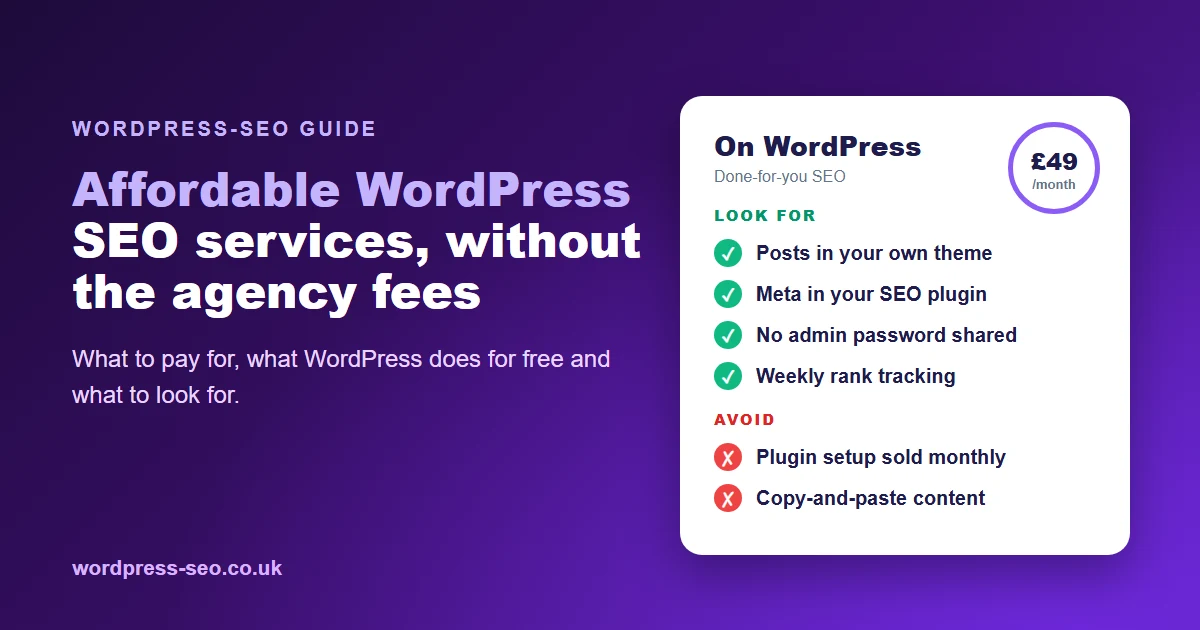
Most UK digital marketing agencies charge a minimum of £200/month for managed SEO, with prices often exceeding £1,000 for competitive sectors. By contrast, WordPress-SEO pricing starts at just £49/month, with a £1 trial and no long-term contracts. That’s a fraction of traditional agency fees—ideal for entrepreneurs who want results without the commitment or cost. Our managed service includes keyword research, article writing, on-page SEO, and automatic publishing via the WordPress REST API.
Local SEO Tools and Resources for UK Entrepreneurs
Leverage free tools like Google My Business, Google Search Console, and Bing Places to monitor your local performance. Platforms such as Moz Local and BrightLocal offer advanced reporting and citation tracking for UK businesses. For WordPress users, plugins help with sitemaps, schema, and internal linking, but automated services like WordPress-SEO eliminate the technical hassle and save valuable time.
Maximising Your Local SEO: Ongoing Steps and Success Factors
Local SEO is not a one-off project but an ongoing process. To stay ahead, monitor your rankings and traffic using Google Analytics and Search Console. Update your website regularly with fresh, locally relevant content—this signals to Google that your business is active and authoritative.
Keep your business details up to date everywhere online. If you move premises, change your phone number, or update your services, reflect those changes on your website and all local listings. This is crucial for avoiding confusion and maintaining your search rankings.
Encouraging Customer Engagement and Social Proof
Ask satisfied customers to leave reviews and testimonials—these are key for building trust and improving your local search ranking. Share positive feedback on your website and social media, and engage with your audience through regular posts and updates. Social proof is a major factor in converting local searchers into loyal customers.
Monitoring Competitors and Adapting Your Strategy
Keep an eye on what top-ranking local competitors are doing. Analyse their content, backlink profile, and GMB activity to spot opportunities. Regularly adapt your own strategy to stay ahead, whether by targeting new keywords, adding new services, or improving your review score. Continuous improvement is the hallmark of the best local SEO strategies for small businesses UK.
Frequently Asked Questions
How can I quickly improve my local SEO as a UK small business?
Start by claiming your Google My Business profile, using consistent contact details across all platforms, and encouraging customers to leave reviews. Regularly publish locally relevant content and build citations on UK directories for a fast boost.
Why are local citations important for local SEO?
Local citations validate your business’s legitimacy and location in the eyes of Google. Accurate citations on directories like Yell, FreeIndex, and local business groups help boost your local search rankings and visibility.
How does mobile optimisation impact local search?
Most UK local searches are now done on smartphones. A mobile-friendly site loads quickly, displays properly, and makes it easy for customers to contact or visit you—factors that increase your ranking and conversions.
How often should I update my website for local SEO?
Update your website at least monthly with new, locally focused content. Consistent publishing signals to search engines that your business is active and engaged—helping you rank higher in local UK searches.
Is managed WordPress SEO worth it for small UK businesses?
Yes—fully managed services like WordPress-SEO are much more affordable than agencies and deliver expert keyword research, content creation, and publishing on autopilot. This saves time and ensures proven results for UK businesses wanting to grow locally.
Applying these local SEO strategies for small businesses UK can transform your online visibility and customer base. If you want to automate the process and see consistent results, WordPress-SEO offers a fully managed local SEO service for UK WordPress sites, from only £49/month. Give your business the edge it deserves—let us handle your SEO while you focus on what you do best.